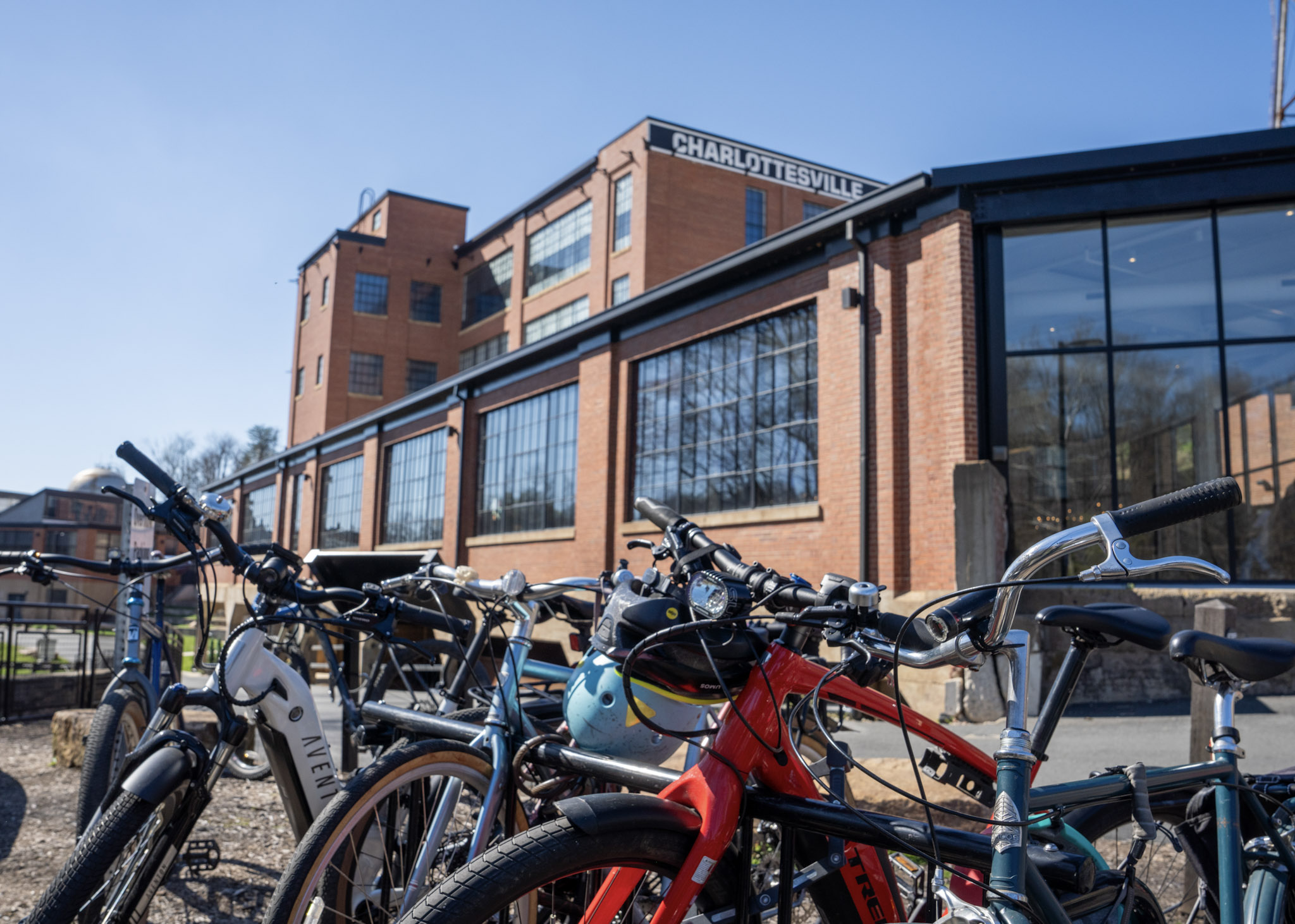
Quality outdoor spaces drive economic prosperity. They give cities and counties competitive advantage over their peers and make communities healthier, better places to live. That encourages business and benefits both newcomers and long-time residents.
According to the most recent data, Virginia’s Outdoor Economy generated $14.4 billion statewide in 2024. In Charlottesville and Albemarle County that figure is close to $1 billion. People come here and choose to stay because it is a great place to live, yet public investment does not match residents’ enthusiasm for the outdoors, nor the magnitude of the opportunity.
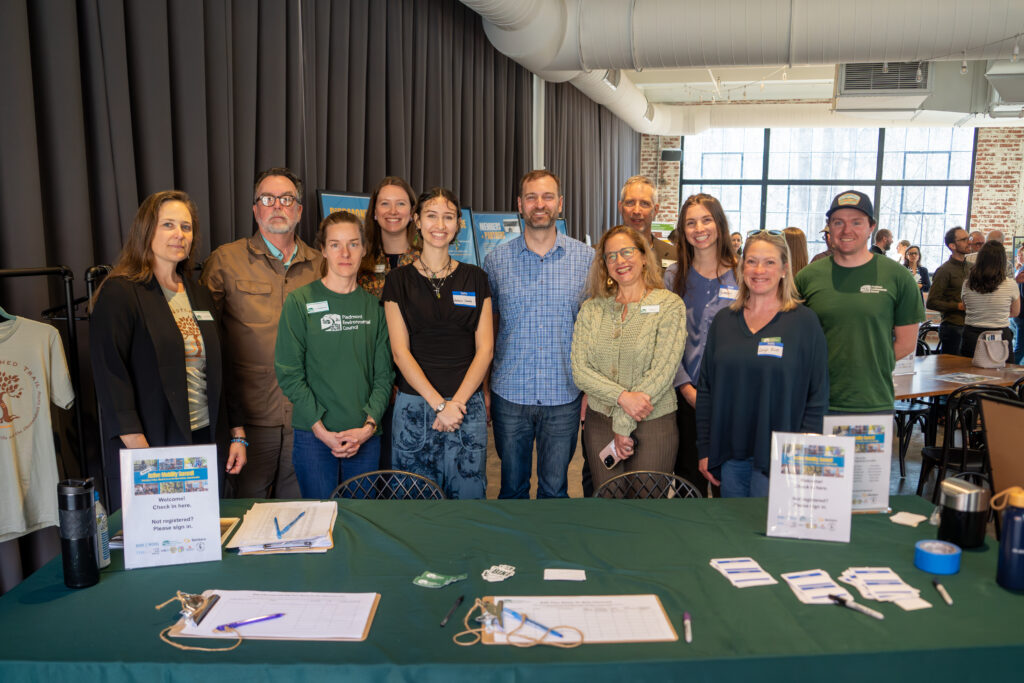
More than 200 leaders, business owners, professionals and advocates gathered to seek ways to close that gap at the 2026 Active Mobility Summit, held March 5 and 6 at The Wool Factory in Albemarle County. At this sixth annual event, organized by The Piedmont Environmental Council (PEC), attendees learned and discussed ways to accelerate the creation of infrastructure that provides access to the outdoors and strengthens the community.
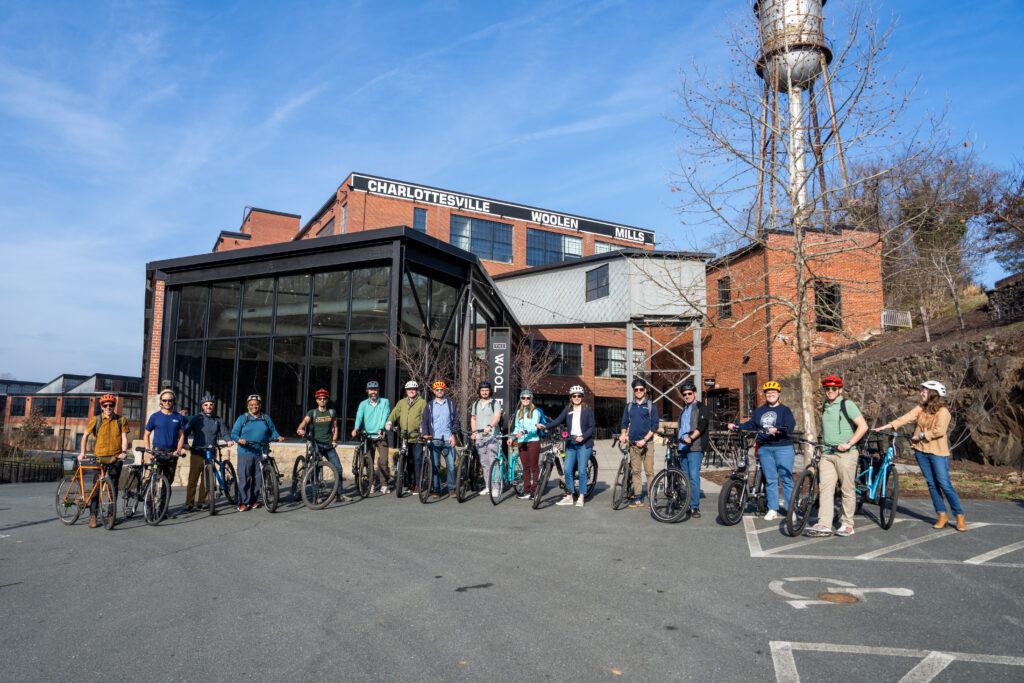
There were two sessions: a Thursday evening community celebration and a Friday morning problem-solving workshop. There has been progress since the Piedmont Mobility Alliance began back in 2017 and these are indeed worth celebrating. There also needs to be a more strategic and coordinated approach to connecting the community and getting people outdoors.
Access to fresh air and connectivity are not grace notes. They are essential and they do not happen by themselves. Regional alignment and sustained partnerships create durable success.
But how does that happen?

An Evening of Celebration and Inspiration
The Active Mobility Summit generates momentum with a three-pronged approach. It celebrates wins to create optimism; it provokes informed discussion; and it provides a platform for collaborative solutions to complex problems.
Local poet MaKshya Tolbert opened the summit with an invocation, describing her deep love for and concern about the trees that make Charlottesville’s Downtown Mall a premiere outdoor public space. Tolbert is a visionary and a rising star. She also unites poetry and practice by, for example, serving on Charlottesville’s Tree Commission in her spare time.
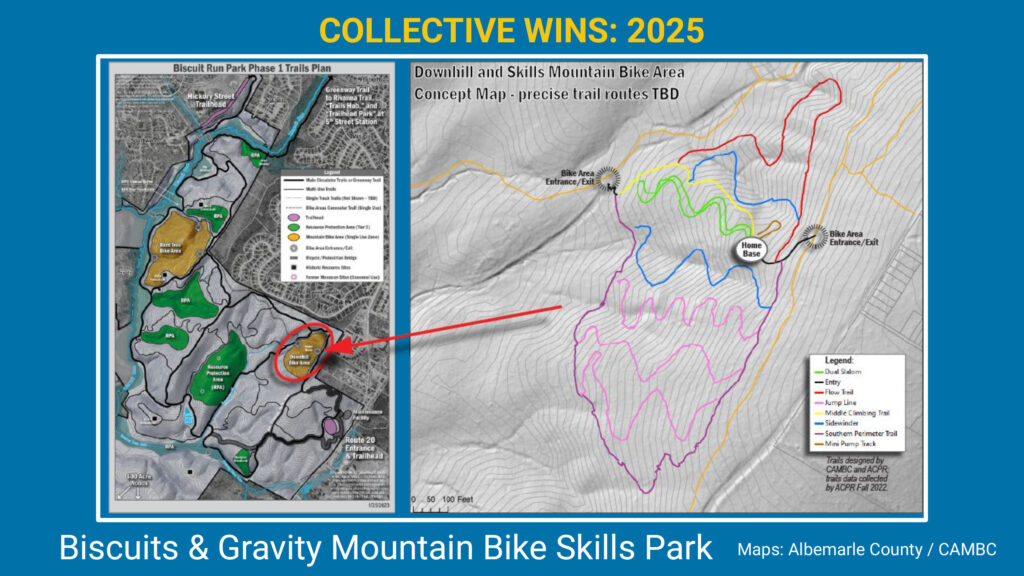
Next followed an encouraging inventory of more than two dozen examples of collaborative wins from 2025, ranging from a new pedestrian bridge over the area’s busiest thoroughfare to a local trail festival to a new bicycle skills area in the region’s largest park, which itself opened just over a year ago.
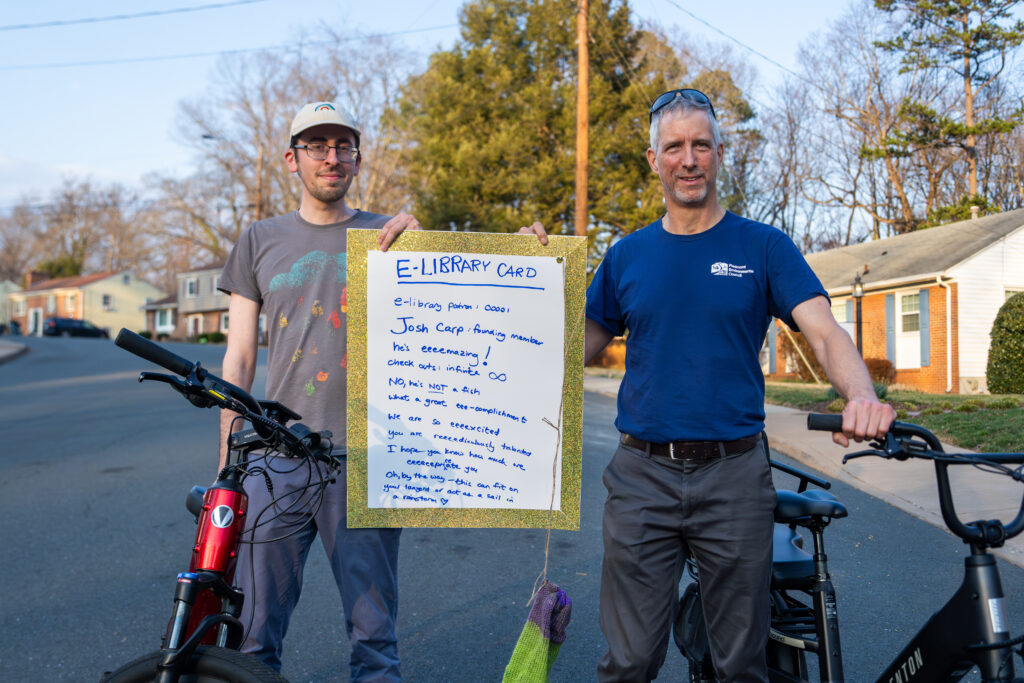
Before taking a break, the Piedmont Mobility Alliance continued its annual practice of celebrating a local champion who transformed the conversation about connectivity and public access in the community. This year, Josh Carp, founder of the Charlottesville E-bike Lending Library, received the hand-crafted award. To date, Carp has served more than 625 borrowers, a large percentage of whom went on to purchase e-bikes.
That in turn provided impetus for the City of Charlottesville’s acclaimed e-bike voucher program, which has awarded 91 vouchers, some of which have covered the full purchase price of new e-bikes.
Quality of Life is Economic Strategy
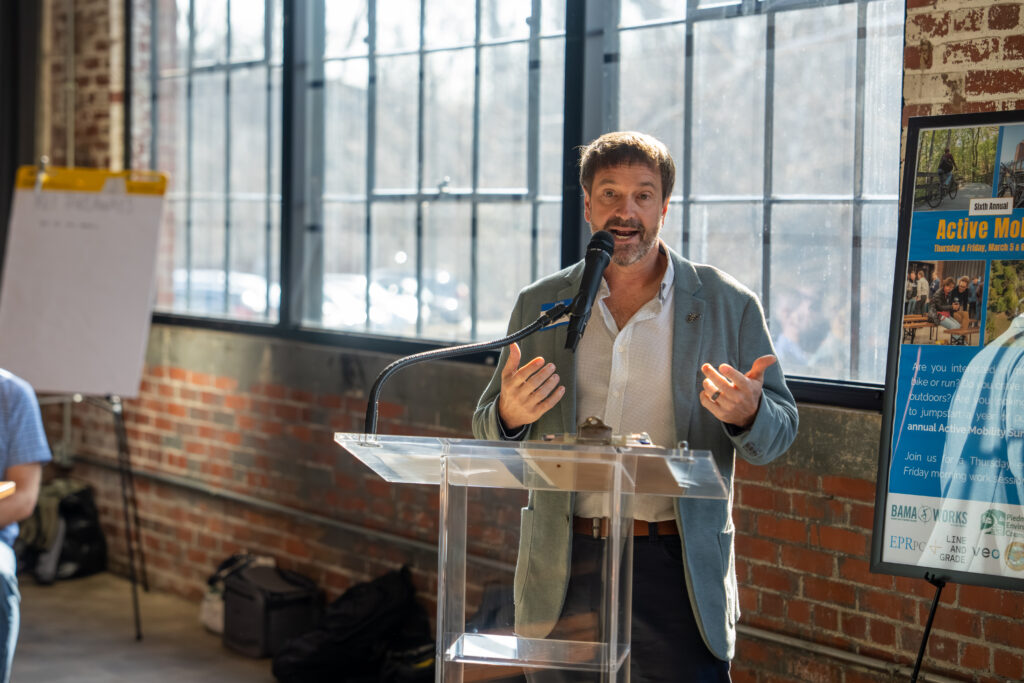
Keynote speaker Pete Eshelman, of the Roanoke Regional Partnership and founder of Roanoke Outside, described his region’s very strategic approach to economic development, which focuses on outdoor recreation. In an era when talent is the essential ingredient and is highly mobile, employers choose to locate where people wish to live. Great spaces create attachment and identity. Identity fuels a region’s competitiveness, which produces economic wins and community improvement that supply credibility and community benefit. It is a cycle that begins not with tax breaks or incentives, but with infrastructure and quality of life improvements.
Roanoke and its surrounding localities work together, along with numerous partner groups to maintain momentum. The regional greenways commission has created more than 30 miles of connected muti-use pathways that are both spaces for reflection and public gatherings, both of which contribute to a sense of belonging and inclusion. Roanoke Outside, which Eschelman founded in 2013 to make it easy for residents and visitors with the outdoors and to promote events like its signature GO Outside Festival every October.
Statewide Perspectives
Virginia’s first Gentleman Adam Spanberger welcomed attendees to the sSummit’s second session on Friday morning. Speaking about his love for hiking, biking and the outdoors, he warmed up the crowd and offered to return to witness – and assist with – future progress.
Maribel Castañeda, Virginia Deputy Secretary of Natural and Historic Resources, described the importance of outdoor recreation to the statewide economy. She connected that with her own experience growing up in Harrisonburg. She noted the importance of advocacy at the state level. She described specifics, like the potential transformative impact of the Virginia Great Outdoors Act, which when passed will provide $250M for conservation, parks and trails every year.
Next followed a lightning round of three 10-minute presentations from trail leaders from other Virginia localities.
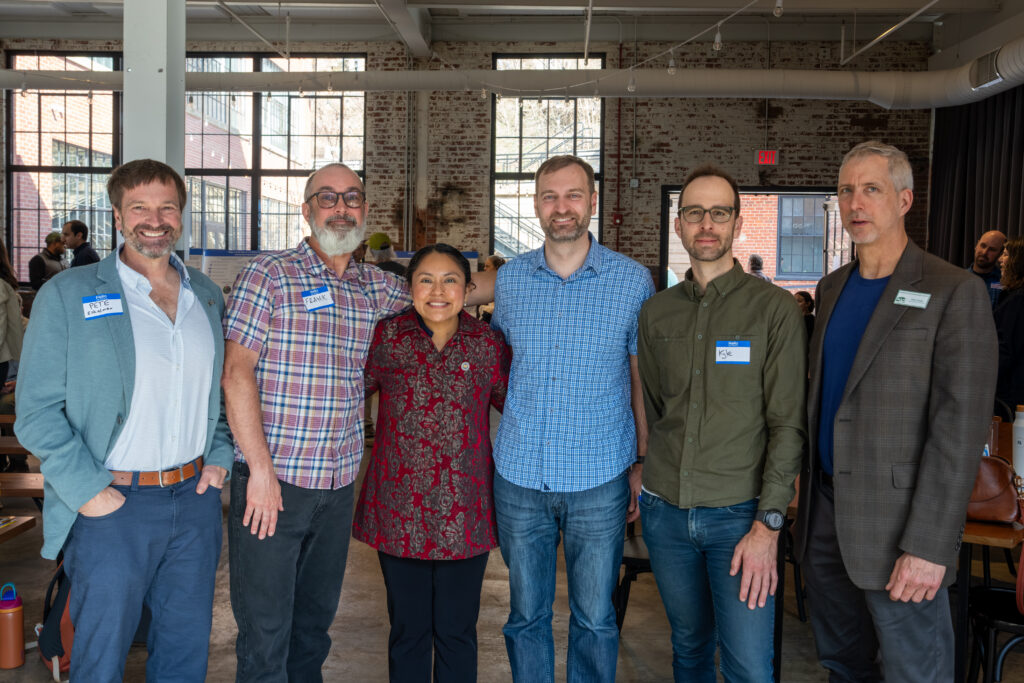
Pete Eshelman returned and spoke about Roanoke’s structured approach to building competitive advantage through the creation of infrastructure for outdoor recreation and access. They created a non-profit partner for their Office of Economic Development and a regional greenways authority to coordinate the many jurisdictions who jointly benefit from their greenways network.
Kyle Lawrence, of the Shenandoah Valley Bicycle Coalition spoke of his group’s work with both public and private landowners to create large-area trail networks. Those places provide outdoor escape but they have also created community as places where people encounter friends and build new relationships.
Frank Maguire, founder of consulting firm Small Mountain Trails, built on Eschelman’s earlier comments by reflecting on his own time as the coordinator of the Roanoke Greenways Commission. He noted that their greenways serve multiple roles by promoting public access and connecting communities while also enhancing resilience by making parks out of areas that had been disastrously flooded.
Opportunities for Local Action
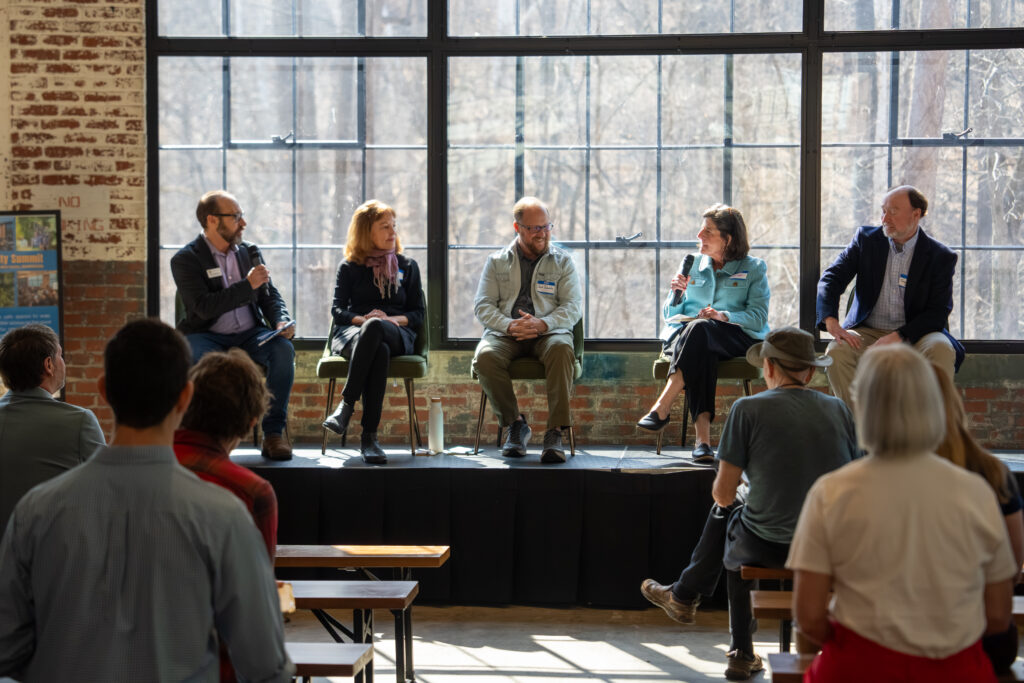
A panel of local officials and leaders next shared their ideas and visions of how Albemarle and Charlottesville might accelerate access to the outdoors and improve walking and biking. Kevin McDermott (Albemarle County) moderated a panel with James Freas (City of Charlottesville), Julia Montieth (UVA), Zach Roberts (Great Outdoor Provisions Co.), Ann Wall (Albemarle County).
Each guest shared perspectives from their current roles and lessons from previous stops on their professional journeys. Regional coordination was a recurring theme, with a significant upcoming opportunity as both the city and the county embark on multimodal mobility plans. Several people noted that only public servants care about jurisdictional boundaries. A lively and extended question-and-answer session followed.
Continuing Collaboration
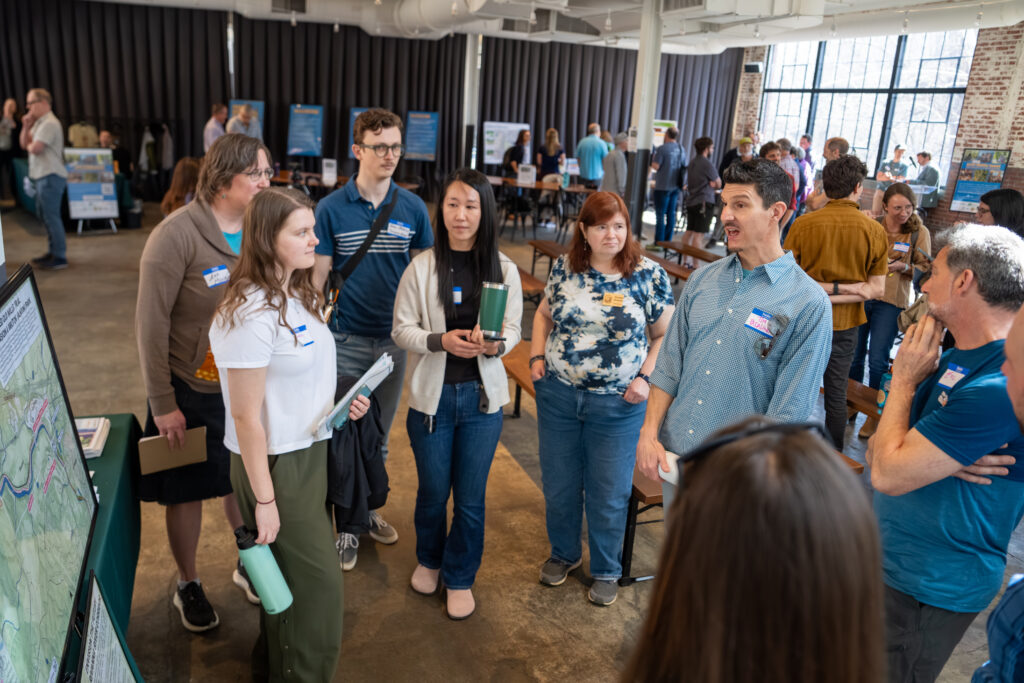
Because the day was so packed with content, the last section of the summit was compressed. The event concluded with short work groups focused on three ongoing local efforts, each with opportunities for significant participation this spring.
A group checked in on progress on last year’s summit featured topic, the Three Notched Trail. Specifically, they discussed forming a Friends organization that would coordinate community involvement, advocacy and fundraising.
The Piedmont Mobility Alliance’s next massive collective celebration will be Bike Month in May. There will be a kickoff gathering and volunteer recruitment in conjunction with a bike-oriented film festival April 2, 6:30 p.m.
A coalition of organizations, groups and local agencies is working to expand the Rivanna River Greenway and Blueway, with specific plans to extend the Old Mills Trail. Rivanna Riverfest (May 9) will include a walk and a run along the Old Mills Trail and an opportunity to learn more.
Those sessions only had half the usual hour-long allotment of time, but the important thing was the formation of connections. The actual work happens throughout the year.
The Trail Goes Ever Forward
The Mobility Summit happens once a year, but it is just an episode in an ongoing collaboration to improve quality of life in the Charlottesville-and-Albemarle region. The summit is rich in content; each video is worth watching and the attendee packet includes many educational resources and more ways to get involved. Its tone is affirmative: One attendee said, “This is the first event I’ve attended in a long time that left me feeling inspired.” It is highly collaborative focused on interactive discussion. It is both a forum and a model for collaborative problem solving.
The summit is organized by a coalition of groups representing the city, county, University of Virginia, businesses and non-profit groups with coordination from The Piedmont Environmental Council. Several coalition members also sponsored the summit financially or with major in-kind contributions.
Summit Organizing Committee
Jason Espie, Jen Fleisher, Natalie Gomez, Guinevere Higgins, Allie Hill, Alberic Karina-Plun, Hugh Kenny, Peter Krebs, Kevin McDermott, Lindsey Messer, Julia Monteith, Amanda Poncy, Chris Ridder, Tommy Safranek, Faith Schweikert, Hanna Strauss, Diana Webb
Summit Sponsors

Learn more about the Mobility Alliance and its collective approach at www.pecva.org/mobilityalliance or contact its coordinator Peter Krebs ([email protected]). Sign up for updates at www.pecva.org/mobilityadvocate.